
Tripling B.C.’s Public Charging Network by 2035
July 27, 2026
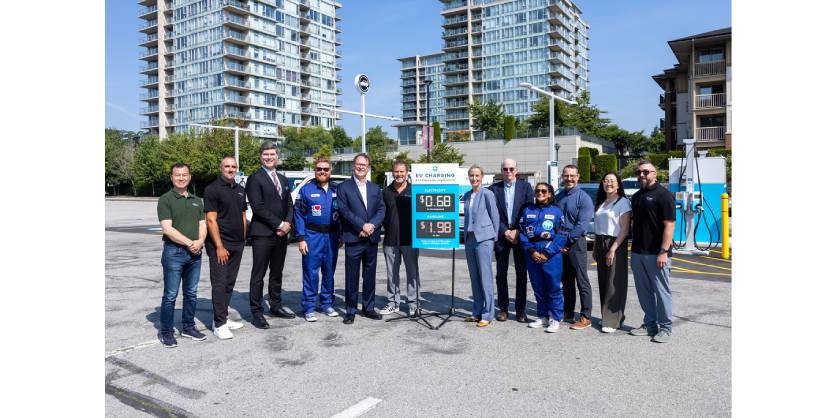
Provincewide expansion will deliver faster, more convenient charging for EV drivers in B.C.
Summary
- BC Hydro will deploy 3,500 public charging ports by 2035, creating one of Canada’s largest public charging networks
- The expansion will more than triple the size of BC Hydro’s existing charging network and significantly increase charging capacity throughout the province
- New charging hubs will be added in communities throughout B.C., along major highways and in high-demand urban areas
- The plan includes faster charging technology, larger charging hubs and new customer-focused features to improve reliability and convenience
Together with BC Hydro, the Province is expanding British Columbia’s public charging network, more than tripling the number of charging ports in the province.
“As conflicts overseas increase pain at the pumps here at home, more British Columbians are switching to electric vehicles,” said Adrian Dix, Minister of Energy and Climate Solutions. “We need to make sure they can count on a charging network that is convenient and reliable. By dramatically expanding access to electric vehicle (EV) charging, we’ll help make it easier to choose a car that cuts pollution and saves families money every time they get behind the wheel.”
BC Hydro is deploying 3,500 new public charging ports by 2035 to support the province’s growing number of electric vehicles and meet increasing demand for public charging.
Supported by a $700-million investment, the expansion will more than triple the size of the network and strengthen BC Hydro’s role as B.C.’s leading provider of public charging. Over the next decade, BC Hydro will add new charging hubs in communities throughout the province, along major highway corridors and in high-demand urban centres, helping ensure drivers have access to reliable and convenient charging wherever they live, work and travel.
Meeting the growing demand for EV charging
BC Hydro’s public fast-charging network includes 917 charging ports at 190 locations in the province. As demand continues to grow, BC Hydro is accelerating expansion plans, targeting 3,500 ports by 2035.
The expansion will provide more charging capacity in communities throughout B.C., supporting long-distance travel and helping keep pace with growing EV adoption in the province.
Delivering a better charging experience
The next phase of the network will introduce a new generation of fast-charging hubs designed around reliability, consistency and customer convenience.
Every new site will follow a standardized design that improves the customer charging experience and accessibility, simplifies maintenance and supports efficient network expansion. BC Hydro will also deploy larger charging sites in strategic locations to meet growing demand and reduce wait times during peak travel periods.
“British Columbians are adopting electric vehicles at one of the fastest rates in North America, and we’re building the charging network needed to support that growth,” said Charlotte Mitha, president and CEO, BC Hydro. “By expanding to 3,500 charging ports, introducing faster charging technology and creating more reliable, customer-focused charging hubs, we’re giving EV drivers confidence they can have dependable charging wherever their journey takes them in B.C.”
Preparing for the next generation of EV charging
The network expansion will include several new features designed to improve performance and customer convenience, such as:
- standardized site designs that improve reliability, accessibility and the overall customer experience
- new signature sites in strategic locations will offer enhanced amenities, such as washrooms
- new showcase sites will offer best-in-class charging experiences, such as canopies and digital signs
- faster, future-ready charging technology, with 200-kilowatt chargers becoming the network standard, 400-kilowatt ultra-fast chargers introduced at select high-demand locations and continued exploration of innovative charging technologies that keep pace with rising customer expectations and the growing capabilities of EVs entering the market
- enhanced customer features, including plug-and-charge capability and tap-to-pay functionality
Building on the success of B.C.’s Electric Highway
The expansion builds on BC Hydro’s work in public fast charging. Together with the Province, BC Hydro helped complete B.C.’s Electric Highway, creating a provincewide network of fast chargers located approximately every 150 kilometres along major highways and travel corridors.
EV drivers can travel throughout British Columbia with confidence, knowing reliable fast charging is available in communities throughout the province and along key transportation routes. The next phase of expansion builds on that foundation by adding significantly more charging capacity, faster charging technology and improved customer experience across the network.
The expansion supports B.C.’s transition to cleaner transportation while providing drivers with a reliable and future-ready charging experience wherever they travel in the province.
More funding for public chargers
In addition to BC Hydro’s 3,500 public charging ports, the Province is helping businesses, non-profit organizations, Indigenous communities, local governments, utilities and public-sector organizations expand B.C.’s charging network. Applications are open for the CleanBC Go Electric Public Charger Program, which will invest approximately $18 million in new public fast chargers, with a focus on Indigenous, rural and northern communities, as well as high-demand areas where drivers face long wait times.
Quick Facts:
- As of April 1, 2026, more than 238,000 light-duty zero-emission vehicles are registered in the province, up from more than 3,000 in 2015.
- As of April 1, 2026, there are more than 8,900 public charging ports in B.C., an increase of 87% from 2023.
- Of these, 6,599 were Level 2 ports and more than 2,300 were fast-charging ports.
- In 2025, the zero-emission vehicle sector added $2.1 billion (direct and indirect) to the B.C. economy and employed a total of 16,400 people (9,340 direct).
Learn More:
- To learn more about BC Hydro’s public charging network, visit: https://bchydro.com/fastcharging
- To learn more about the CleanBC Go Electric Public Charger Program, visit: https://goelectricbc.gov.bc.ca/find-rebates/public-charging-light-duty/
A backgrounder follows.
Backgrounders
What people are saying about the expansion
George Anderson, parliamentary secretary for energy and climate solutions –
“We’re making it easier, faster and more comfortable and convenient for EV drivers to charge up and head down the road. And that’s the road to cleaner air, thriving communities and a strong economy powered by clean electricity.”
Brett Favaro, dean of the faculty of science, Kwantlen Polytechnic University –
“Kwantlen Polytechnic University is proud to partner with BC Hydro to host public EV charging at our Richmond campus, which will give community members a convenient place to plug in. Every new charger advances electrification and moves B.C. closer to its climate goals, and we are happy to help power that shift.”
John Roston, founder and co-ordinator, Plug-in Richmond –
“This is a major step forward for electric-vehicle adoption and use in British Columbia. It will greatly improve the availability of reliable fast charging in the locations close to public amenities in demand by EV drivers. Plug-in Richmond commends the B.C. government and BC Hydro for devoting the resources necessary to the project.”
Joanna Kyriazis, director of policy and strategy, Clean Energy Canada –
“Further building out the province’s charging network is one of the best ways the government can unlock EV ownership for more households, helping them save thousands of dollars a year on gas. A focus on fast-charging hubs in high-demand urban areas in particular will ensure charging is available for apartment dwellers, renters and younger Metro Vancouverites who we know would like to go electric but require a reliable place to charge.”
Bob Sparks, board member, chair of government relations committee, Vancouver Electric Vehicle Association –
“The deployment of 3,500 new charging ports in BC Hydro’s public EV charging network by 2035 nicely builds on the commitments set out in the utility’s 2025 Driving Forward progress report. An important addition here is the implementation of a standardized site design that is intended to improve the customer charging experience and accessibility for all users. BC Hydro was an early leader in developing accessibility guidelines, and the prospects of integrating such improvements into their stations is exciting, especially in the context of CSA’s newly published universal accessibility design recommendations.”
Blair Qualey, president and CEO, New Car Dealers Association of B.C. –
“Today’s announcement recognizes that the transition to electric vehicles depends on more than the vehicles themselves, it also requires the infrastructure to support them. B.C.’s new car dealers welcome this investment in expanding the province’s charging network, which will help make EV ownership more practical while giving consumers greater confidence to make the switch.”
Thomas L. Green, senior manager, climate solutions, David Suzuki Foundation –
“Around the world, clean electrons are displacing fossil molecules, and BC Hydro is leaning into that trend by tripling EV charging ports. Charging EVs across the province means more affordable transportation, cleaner air and better health outcomes. This infrastructure helps B.C. seize future opportunities while supporting better climate outcomes, imperative in a province facing extreme weather and wildfires.”
Daniel Breton, president and CEO, Electric Mobility Canada –
“Electric Mobility Canada applauds the B.C. government and BC Hydro for their ambitious EV charging strategy. For years, British Columbia has been a leader in EV adoption. This new announcement proves once again that B.C. is serious about the transition to EVs by making sure the public EV charging experience will be amongst the best in North America.”
Related Story
Advancing B.C.’s First Major Battery Storage Project on Vancouver Island
The Province and BC Hydro are advancing British Columbia’s first utility-scale battery energy storage project on Vancouver Island, helping strengthen reliability and prepare for growing electricity demand in the region.
“As demand for electricity continues to grow throughout British Columbia, we are making strategic investments to continue to deliver reliable, affordable and clean power to homes and businesses,” said Adrian Dix, Minister of Energy and Climate Solutions. “B.C.’s first utility-scale battery storage facility will help power the Island and is a key part of BC Hydro’s Powering Growth plan to strengthen our electricity system and support the province’s future growth.”