
How Your EV Charger Could Start a House Fire: The Hidden Dangers of NEMA 14-50P Receptacles
July 15, 2025
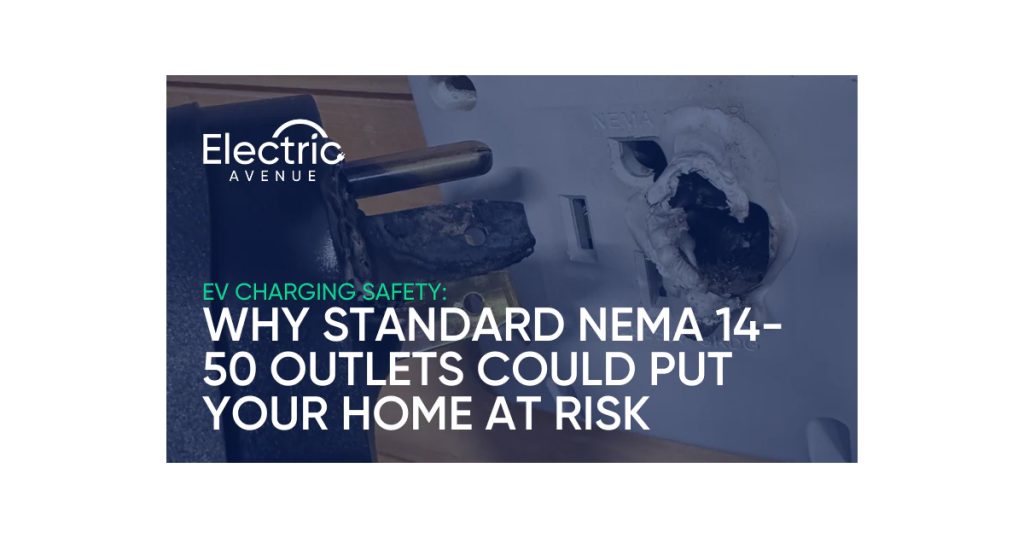
Electric vehicles (EVs) are becoming increasingly popular across North America, offering eco-friendly and efficient transportation options. However, as more households adopt EVs, a critical safety concern has emerged: the potential for house fires caused by charging EVs using standard NEMA 14-50P receptacles at 40 amps.
This article will delve into the risks associated with using these receptacles, explore real-life experiences from EV owners and electricians, and offer practical advice to ensure your EV charging setup is as safe as it is convenient.
The Problem with Standard NEMA 14-50P Receptacles
The NEMA 14-50P receptacle is a common choice for Level 2 EV charging, offering a convenient plug-in option for many drivers. However, several inherent risks make this solution potentially dangerous:
Loose Connections: Over time, the screws holding wires in place can loosen, creating high-resistance points. When a high current flows through these points, the result is excessive heat generation, which can lead to melting or fire.
Worn or Corroded Contacts: Daily use can cause wear and tear on contacts, reducing conductivity and increasing resistance. Corrosion further exacerbates this issue, increasing the risk of overheating.
Lack of EV-Specific Design: Standard NEMA 14-50P receptacles were not originally designed for the continuous high-current demands of EV charging. As a result, they may not withstand prolonged use at high amperage levels, leading to potential safety hazards.
Real-Life Incidents Highlight the Risks of House Fires

Several Reddit threads (including Randall Cobb‘s story) and news articles (like Jay Becraft‘s story) have captured the collective experiences of EV owners and electricians who have faced common issues with NEMA 14-50P receptacles.
Overheating and Melting: Users have reported instances where the receptacle or plug became excessively hot, leading to melting of the plastic components.
Electrical Fires: In severe cases, the overheating has resulted in electrical fires, causing property damage and posing serious safety risks.
The Emergence of EV-Rated NEMA 14-50 Receptacles
In response to these safety concerns, manufacturers have developed EV-rated NEMA 14-50 receptacles. These are specifically designed to handle the continuous high-current loads associated with EV charging. Key features include:
Enhanced Durability: Built with robust materials to withstand frequent plugging and unplugging, as well as prolonged high-current use.

Improved Thermal Management: Designed to dissipate heat more effectively, reducing the risk of overheating.
EV-Specific Markings: Clearly labelled to indicate suitability for EV charging, helping users and electricians easily identify appropriate equipment. For example, Legrand’s Pass & Seymour 3894WREV is specifically designed for EV charging applications, built with high-temperature-resistant materials to outperform and outlast standard receptacles.
Updated Safety Standards and Code Requirements
The National Electrical Code (NEC) has recognized the unique demands of EV charging and updated its standards accordingly:
GFCI Protection:As of the 2023 NEC update, all single-phase receptacles installed for EV charging, rated at 150 volts to ground or less, and 50 amperes or less, must have Ground-Fault Circuit-Interrupter (GFCI) protection to ensure personnel safety.
Future Requirements: While there is currently no listing standard for EV receptacles, discussions are ongoing about requiring receptacles used for EV charging to be listed for that purpose in future code updates.
These updates emphasize the importance of using equipment specifically designed and rated for EV charging to ensure safety and compliance.
Recommendations for Safe EV Charging
To mitigate the risks associated with using a NEMA 14-50P receptacle for EV charging, consider the following recommendations:
Opt for Hardwired Connections: Whenever possible, choose a hardwired installation rather than using a plug for 40A connections. This reduces the potential for poor contact and overheating.
Use EV-Rated Receptacles: If you must use a plug, ensure that the NEMA 14-50P receptacle is specifically rated for EV charging, as these are designed to withstand higher continuous loads.
Install GFCI Protection: Ensure that your EV charging setup includes GFCI protection, as required by the NEC, to prevent electrical shock hazards.
Regular Inspections: Periodically inspect your charging equipment for signs of wear, corrosion, or damage, and replace components as necessary.
Consult a Licensed Electrician: Always work with a qualified electrician to install or upgrade your EV charging setup, ensuring compliance with local codes and safety standards.
CONCLUSION
As EV adoption continues to rise, it’s crucial to prioritize safety in your home charging setup. Standard NEMA 14-50P receptacles may not be suitable for the continuous high-current demands of EV charging, posing risks of overheating and fire. By opting for EV-rated receptacles, incorporating GFCI protection, and adhering to updated safety standards, you can ensure a safer and more reliable charging experience.