
Pollution Probe Report Finds Skills Gap Needs Filling to Address Electrification of School Buses
July 14, 2026

Answers attributed to Marc Saleh, PhD, Director, Transportation at Pollution Probe, Questions developed by Krystie Johnston, Managing Editor, Kerrwil Media Ltd.
Pollution Probe released a report on July 6, 2026, highlighting the importance of workforce training to support Canada’s transition of electric school buses. Developed in collaboration with Mobility Future Labs, and funded by the Future Skills Centre, their findings emphasize the importance of ensuring that workforce training systems evolve to ensure a steady pipeline of skilled workers going forward.
Marc Saleh, PhD, Director at Pollution Probe, shared his insights about the importance of this report, its findings, and their recommendations to support the electrification of school buses in Canada.
Can you start by telling us about who you are and what you do at Pollution Probe?
Pollution Probe was founded in September 1969 by University of Toronto students and professors and has since been at the forefront of progress on a wide range of environmental issues. Our transportation program supports efforts to address climate change and reduce air pollution while promoting job creation and economic growth.
In addition to delivering research and demonstration projects, we actively contribute to expert transportation committees and working groups at the local, regional, national, and international levels. We are technology-neutral and work collaboratively with a wide variety of stakeholders to develop transportation decarbonization solutions across all modes.
What is your experience with school buses? And what is your experience with EVs? Why is the electrification of school buses important to you?
We have been working extensively on the electrification of both light-duty and medium- and heavy-duty vehicles, with a particular focus on school buses for more than five years. School buses have predictable daily routes and operate in stop-and-go conditions, making them a strong candidate for electrification.
Today, most school buses run on diesel, which contributes to climate change and produces pollutants such as particulate matter and nitrogen oxides that are known to have negative impacts on human health, particularly for children. Decarbonizing this segment of the transportation sector is therefore an important focus for us.
Why did you embark on the recently published Pollution Probe Report? Why was it important to conduct this research? And how did you approach the project? Who was the report for? Who was the intended target audience?
We have worked on a series of projects focused on electric school buses, ranging from policy development and fleet electrification studies to real-world pilot deployments where we monitored vehicle performance, range, and reliability under Canadian operating conditions.
Through this work, we came to recognize that the successful deployment of electric school buses depends not only on the technology itself, but also on having a workforce with the skills needed to maintain and service these vehicles.
The report was developed to support both fleet operators and policymakers. For fleet operators, it provides practical information on how electric school buses will affect maintenance practices, workforce requirements, and operational planning. For policymakers, it highlights gaps in the current training ecosystem and identifies opportunities to support workforce development and upskilling.
What did the report reveal, specifically? Were these findings what you expected? Anything unexpected? Why?
The report found that high-voltage safety and electrical diagnostics represent a fundamental shift from traditional diesel maintenance, while charging infrastructure introduces new operational and maintenance responsibilities. It also found that training opportunities remain fragmented, with limited but growing certification pathways and standards for electric vehicle technicians. These findings were largely consistent with what we expected based on our experience supporting electric school bus deployments.
Let’s focus on one finding in particular: that technicians need more training to support the transition to electric school buses.
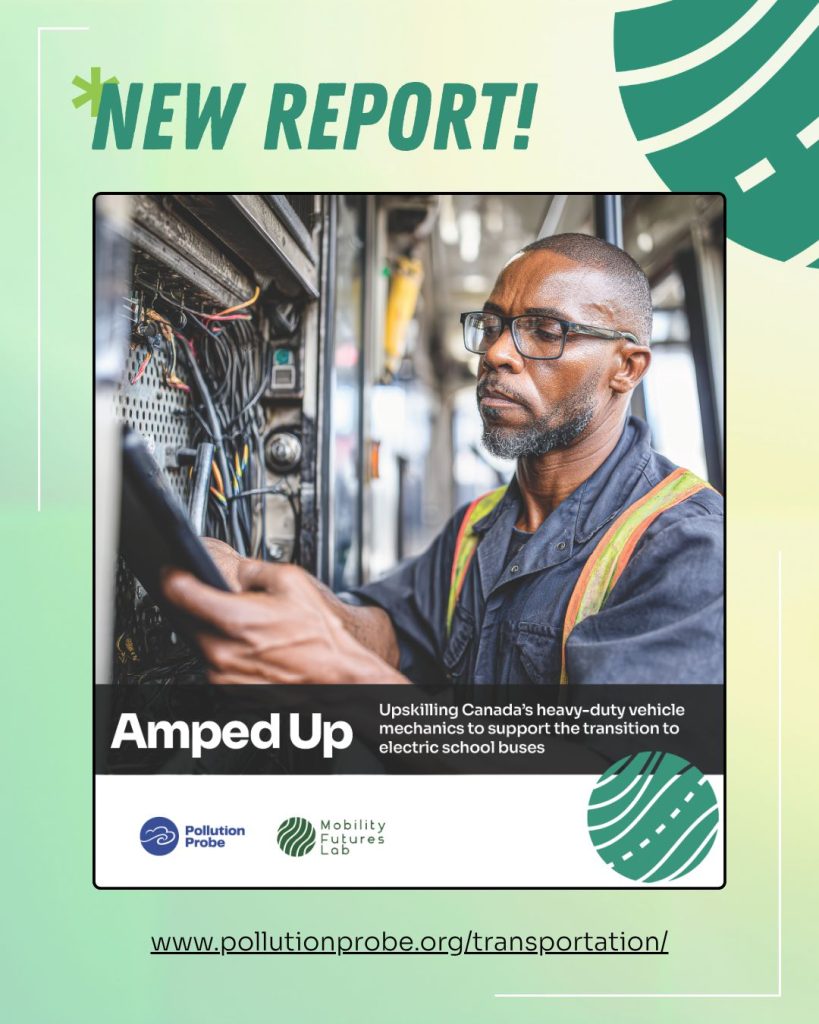
What gaps did the report highlight? And what are the recommendations to bridge those gaps? How is Canada preparing for this transition and what are some challenges that will affect progress as a nation and at the provincial level? Any regions in particular showing more progress than others?
The report found that the biggest training gaps relate to high-voltage safety, battery diagnostics, power electronics, charging infrastructure, and the use of software-based diagnostic tools. Traditional diesel technicians already possess many transferable skills, but electric school buses require additional competencies that are not typically covered in conventional heavy-duty mechanic training.
Training opportunities also remain fragmented, with a mix of OEM-specific training, college programs, and emerging certifications that are not always aligned or widely available.
Most school bus technicians already come through established trade pathways, often obtaining a Red Seal endorsement that allows their qualifications to be recognized across provinces, and the focus is on supplementing that foundation with EV-specific training. Canada is beginning to prepare for this transition, but progress varies by region.
Quebec is currently one of the stronger examples, having invested directly in training programs for heavy-duty electric vehicle technicians. One of the main challenges nationally is ensuring that smaller fleets and rural operators have access to the same training opportunities as larger organizations.
What were the report’s main recommendations to address the gap in skilled technicians to ensure an adequate pipeline of talent to support the ESB transition in the years to come? Who (individuals and/or organizations) is best suited to see this through? And maintain it once established?
We recommend integrating more EV content into existing apprenticeship, college, and trade programs, expanding upskilling opportunities for current technicians, and creating clearer pathways for technicians to gain recognized EV competencies. The report also recommends exploring a national EV endorsement through Canada’s existing Red Seal system and accelerating the development of EV-focused certifications and standards.
Delivering this will require collaboration across multiple organizations. Governments can support funding and training frameworks, colleges and training providers can deliver instruction, manufacturers can provide vehicle-specific expertise, standards bodies can help establish recognized credentials, and fleet operators can invest in ongoing workforce development.
What else do you want readers to know about the electrification of school buses? This recent report? Or Pollution Probe or its partners?
One of the key messages from this report is that workforce development should not be viewed as a barrier to electrification, but rather as an opportunity. Electric school buses are creating demand for new technical skills that can support high-quality jobs while helping reduce emissions and improve air quality for students and communities.
More broadly, our experience with electric school bus projects across Canada has shown that the technology is ready today. The focus now is ensuring that fleets have the workforce capacity, training, and resources needed to deploy and maintain these vehicles successfully at scale.
Conclusion
As the electrification of transportation is accepted and expanded across Canada, it will need infrastructure and a skilled workforce to support it. Pollution Probe’s recent report highlights this and offers recommendations for next steps to reap the environmental gains that could result from the electrification of school buses.
Interested in learning more? Visit Pollution Probe today or download the report here.

About Marc Saleh
Marc Saleh, PhD, is the Founder and Lead Consultant at Mobility Futures Lab (MFL), a Canadian firm specializing in sustainable transportation solutions. At MFL, he leads projects on electric vehicle feasibility charging infrastructure planning, zero-emission vehicle pilot deployments, and technology and market assessments in the transportation sector.
Marc’s expertise spans economic and environmental modeling, EV energy consumption analysis, charging system design, and the development of mapping and software tools to support fleet electrification. He earned his PhD from the University of Toronto’s Transportation Research Institute, where his research focused on emerging technologies to reduce transportation emissions.
Original Press Release
New Report Highlights Workforce Training Needs to Support Canada’s Transition to Electric School Buses
Electric school buses are playing an increasingly important role in reducing greenhouse gas emissions, improving air quality, and creating healthier transportation systems for students and communities across Canada. As adoption accelerates, a new report from Pollution Probe, developed in collaboration with Mobility Futures Lab, and funded by the Future Skills Centre (FSC) through the Government of Canada’s Future Skills Program, highlights the importance of ensuring that workforce training systems evolve alongside the technology.