
Load Center vs Panelboard: What’s the Difference?
June 5, 2206
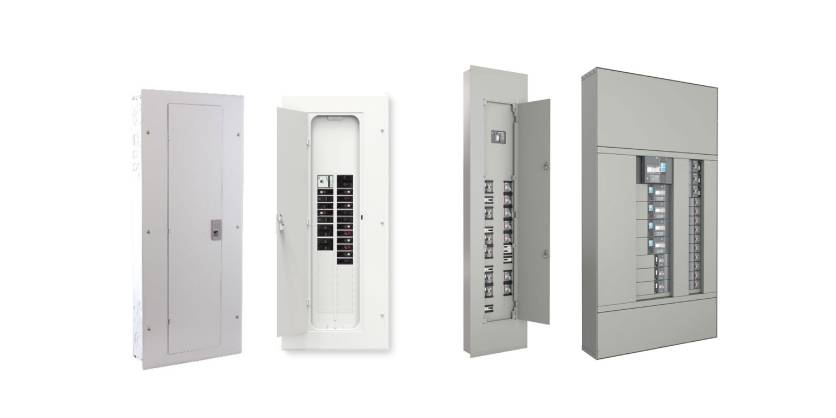
Load centers and panelboards are both used to safely distribute electricity throughout a building while protecting systems from short-circuits and overloads mainly. This leads to them often being used interchangeably in conversation. However, there are important technical distinctions that make all the difference.
Load centers are designed for residential systems with lower voltage and amperage requirements, whereas panelboards are built for commercial and industrial environments with higher power demands and greater complexity. While from a CEC and CSA standards perspective, both are similar, the industry differentiates them by application, capacity, and construction.
Understanding these differences is key to proper equipment selection. This article explores their technical specifications, differences in construction and application, and how to choose between them.
Where The Confusion Comes From
Why these terms get mixed up
It’s not surprising that load centers and panelboards are often confused in conversation. At a glance, they look similar. Both distribute electricity, protect circuits, and house similar components. Even the governing standards of CEC and CSA C22.2 No. 29 provide no distinction. But despite these similarities, they are not interchangeable. The electrical industry differentiates them based on their application, voltage and amperage ratings, accessories, features, and their construction. Making the correct choice between them is vital for safety, compliance, better cost, and performance.
What they have in common
Load centers and panelboards have a lot in common. At a high level, they effectively do the same job: safely distributing power to branch circuits and providing overcurrent protection. They also contain similar parts, circuit breakers, along with neutral and ground bus bars, all housed within a protective enclosure. They are even governed by the same electrical codes and standards. Where they differ, however, is in capacity, complexity, and design.
What Is a Load Center?
A load center’s defining features and use cases
Load centers are designed primarily for residential use. Sometimes called “a breaker box” or “residential panel,” these electrical distribution devices draw power from the main utility connection and distribute it to circuits throughout the home. They also contain breakers that automatically disconnect power when they detect overloads, short circuits, ground fault, arc fault, and power surges, preventing damage, electric shock hazard, and fire risk.
Load centers like the ABB ReliaHome™ series exemplify modern residential design, offering innovative features, straightforward installation, and extended durability.
Load center technical specifications
- Voltage Rating: Up to 240V
- Amperage Rating: Typically 100A, 150A, or 200A (maximum 400A)
- Phase: Single-phase or three-phase
- Breaker Type: Plug-in breakers exclusively
- Physical Depth: Shallower profile (typically 3.5″ – 4.5″)
- Installation: Generally simpler, designed for quick residential installation
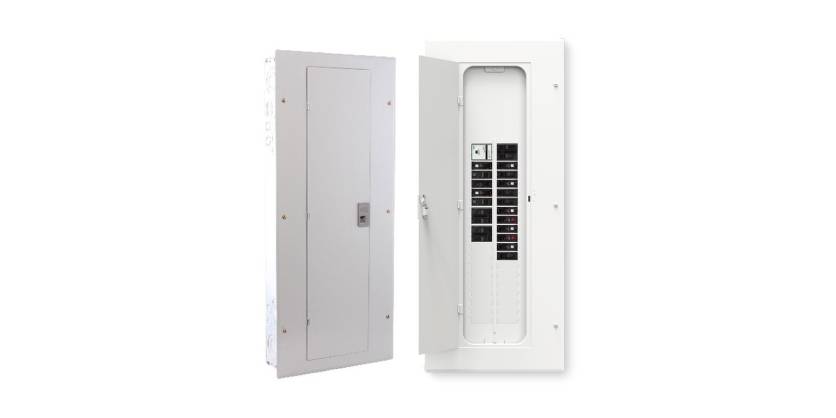
From a construction standpoint, load centers are built with residential use in mind. Housed within lighter-gauge enclosures, their components are sized for typical household loads, supporting a maximum of 240V and 400A. Their design allows breakers to snap directly onto bus bars without needing any tools – known as plug-in mounting which simplifies installation and maintenance.
Load center construction features
Load centers are also fixed capacity. Unlike larger systems, they are not designed for modular expansion, which helps keep costs down, but also limits the number of options and accessories available. For most homes, however, this trade-off aligns well with their actual electrical needs, making load centers the ideal, cost-optimized option.
What Is a Panelboard?
A panelboard’s defining features and use cases
Where load centers are built for simplicity, panelboards are engineered for scale. Designed for residential, commercial and industrial applications, they are built to handle the higher voltages and larger loads commonly found in condos, offices, schools, hospitals, factories, warehouses, data centers, and industrial installation.
Panelboards can accommodate more accessories and features, more complex electrical systems, distributing power often across multiple floors or operational areas, and even come available in specialized configurations, making them suitable for a wide range of applications.
Panelboard technical specifications
- Voltage Rating: Up to 600V
- Amperage Rating: Up to 1,200A
- Phase: Single-phase or three-phase
- Breaker Type: Mostly Bolt-ON, but plug-in version is also available
- Physical Size: Larger enclosure (deeper, wider, and taller than load centers)
- Installation: More complex, requires greater expertise
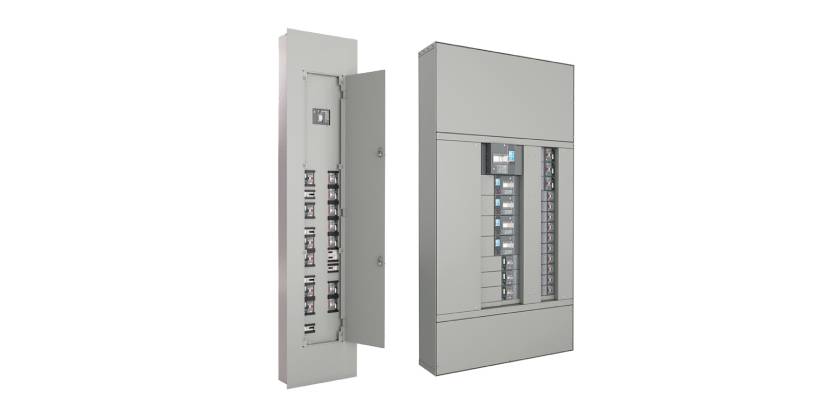
Panelboard construction features
Panelboards can be housed within heavy-duty enclosures built to withstand demanding environments. The spacious enclosure design accommodates heavy-duty breakers with superior kA ratings, ensuring reliable short-circuit protection and ample room for wiring bending.
Built for long-term commercial and industrial service, panelboards offer up to 84 circuits in a single panel, and an extensive range of available features, including energy monitoring, and surge protection.
Explore ABB ReliGear Panelboards
Load Center vs Panelboard: Side-by-Side Comparison
| Load Center | Panelboard | |
| Main Application | Primarily residential applications, including single-family homes, apartments, and small residential sub-panels | Residential buildings, commercial, and industrial applications, depending on panelboard type |
| Voltage Capacity | 240V maximum Residential capacities | 600V maximum Commercial and industrial capacities |
| Amperage Rating | 200A maximum | 1,200A maximum |
| kA Rating | Up to 22kA | Up to 200kA (fully rated) |
| Phase Configuration | Single-phase or three-phase only | Single-phase or three-phase |
| Breaker Types | Plug-in breakers only (faster residential installation) | Plug-in and bolt-on breakers |
| Physical Construction | Shallower depth, lighter construction | Bigger enclosures, heavier-duty construction |
| Available Features | Basic protections (short-circuit, overload, Ground fault, Arc fault, Surge) | Same as load centers, + Energy monitoring, Advanced surge protection, RELT |
| Cost | More economical for residential applications | Higher investment, justified by capabilities and longevity |
| Installation Complexity | Simpler, faster installation | More complex, requires greater expertise |
Breaker types and interrupting capacity (kA ratings)
Circuit breakers protect electrical systems by automatically disconnecting power when they detect short circuits or overloads. Unlike fuses, they can be reset after a fault is cleared, making them a reliable and reusable protection solution.
One of the most important factors when selecting a breaker is its interrupting capacity, measured in kiloamperes (kA). This rating indicates the maximum fault current the breaker can safely interrupt without damage.
In residential applications, load centers typically use plug-in breakers with lower kA ratings, suitable for standard household electrical loads and fault levels. These breakers are designed for ease of installation and cost-effective protection in low-demand environments.
Panelboards, on the other hand, can accommodate both plug-in breakers and molded case circuit breakers (MCCBs), which are designed for higher kA ratings and more demanding applications. MCCBs are commonly used in commercial and industrial environments where fault currents are significantly higher, and system reliability is critical.
While plug-in breakers are generally associated with residential applications, higher-rated breakers, including bolt-on designs and MCCBs, are used where increased fault protection and mechanical robustness are required.
When to Use a Load Center vs Panelboard
Load centers are ideal for:
Load centers are ideal for residential installations or applications under 240V and 225A. Offering cost-effective and simple designs, load centers are frequently used in single-family homes, apartments, condominiums, townhouses, and duplexes.
In addition to new builds, home renovation and improvement projects will often feature load centers when expanding existing electrical systems, upgrading fuse boxes to breakers, or providing garage and workshop sub-panels for tools and equipment.
You’ll also find them in small retail shops and mom-and-pop stores thanks to their low complexity and budget-conscious designs, however a professional electrician is always required for any installation.
Panelboards are required for:
Panelboards are designed for more demanding applications and environments. They cover any system within the 240V – 600V range, supporting both one and three-phase power, as well as more complex circuitry.
Office buildings, commercial spaces, schools, hospitals, condominiums, data centers and institutional buildings all depend on them for reliable, continuous power distribution and usage monitoring, with their technological breakers and robust bus bars capable of supporting critical circuits.
For installations that fall beneath these requirements, a load center is likely your best option.
Expandable units capable of meeting specialized ratings, panelboards are also essential to industrial, manufacturing, and warehouse facilities for managing the demands of heavy machinery and large-scale, hazardous operations.
Decision-Making Framework
Use the following framework to inform your decision-making process:
| Choose a load center if: | Choose a panelboard if: |
| ● Application is residential or light commercial | ● Application is residential (condos), commercial, or industrial |
| ● Voltage requirements are 240V or less | ● Higher voltage capacity is needed up to 600V |
| ● Single-phase/three phase at low amp/circuit count power is sufficient | ● Three-phase power is required (single-phase available) |
| ● Budget is a primary consideration | ● Amperage requirements exceed 225A |
| ● Quick installation is important | ● High kA rating breakers are needed for critical circuits |
| ● Fixed capacity meets long-term needs | ● Future expansion could be anticipated |
| ● Energy monitoring or advanced features are desired | |
| ● Building codes or specifications require it |
Common Misconceptions Clarified
“They’re exactly the same thing”
While they share similar functions and standards (CSA C22.2 No. 29), that’s where the similarities end. They’re intended for different applications, with significant differences in capacity, construction, and complexity. Where load centers offer simple and cost-effective energy management for homes, panelboards are heavy-duty units designed for commercial use.
“I can use a load center in my commercial building”
Possibly, but only for very small-scale, low-demand instances, such as a small boutique store. Once systems exceed 240V or 225A, panelboards become necessary and likely required by code. Please refer to the decision-making framework above for more information.
“Panelboards are just expensive load centers”
Panelboards aren’t simply pricier versions of load centers. While panelboards can offer similar applications as load centers, like 240V 1 phase starting in 100A and 18x 1-pole breaker space, they are fundamentally designed for different applications with heavier construction, greater capacity, more features, and the ability to accommodate both plug-in and bolt-on breakers in a much higher interruption capacity demand.
“Using a panelboard in my home gives me more capacity”
Not necessarily. Your available capacity is determined by your service entrance, not the panel itself. For most homes, properly sized load centers, like the ABB ReliaHome series, are the ideal residential choice due to the optimized size and cost benefit for that application.
“Load centers can’t handle modern homes”
Quality load centers, like ABB ReliaHome, are more than adequate for modern residential electrical demands, including EV chargers, home offices, smart devices, and modern HVAC systems, provided they’re properly sized (typically 200A for modern homes).
ABB ReliaHome Load Centers
Why ABB focuses on load Centers for Residential Applications
For Canadian homes, load centers remain the most appropriate solution. Purpose-built for single-phase residential voltage and amperage requirements, load centers offer the perfect balance of reliability, simplicity, and cost efficiency.
ABB ReliaHome Load Centers exemplify these traits, providing dependable performance, rapid installation, and long-term durability.
ReliaHome product lines
T-Series (Small Circuit Load Centers)
Designed for efficient residential energy distribution, the T-series small circuit load center provides safe, fast, and easy installation. Replacing the legacy small circuit PowerMark™ Gold load centers, the T-series is ideal for standard residential applications.
P-Series (Plug-on Neutral Load Centers)
The P-Series offers advanced load centers for modern residential installations. Their plug-on neutral design leverages ABB’s ReliaLock™ circuit breaker connection for easy and secure breaker installations, while elevated neutral bars and backed-out neutral screws simplify wiring. The P-Series load centers replace the GE legacy PowerMark™ Gold load centers and the ABB PowerMark™ PRO plug-on neutral load centers.
Installation and Code Considerations
Canadian Electrical Code requirements
Regardless of the equipment selected, compliance with the Canadian Electrical Code is essential. This includes proper CSA and/or cUL certification, licensed electricians performing any installation, and accurate load calculations. Equipment must have adequate working clearance (clear, unobstructed space around the equipment) and accompanying circuit directories. Appropriate ground-fault and arc-fault protection must also be provided in line with CSA guidance.
Professional installation is essential
Certified professionals must carry out any panelboard or load center installation for safety, insurance, and liability purposes. Licensed electricians conduct specialist load calculations to verify voltage, amperage, and phase requirements and determine the appropriate equipment. Periodic inspections, or after any modifications, help to ensure systems remain compliant and safe.
The Right Equipment for the Right Application
While load centers and panelboards may look similar and serve similar functions, they are engineered for very different uses. Load centers offer a straightforward, cost-effective solution for residential systems, while panelboards provide the capacity, flexibility, and durability required for demanding commercial and industrial applications. Understanding these differences ensures proper equipment selection for safe and reliable energy management.
For Canadian homeowners and residential projects, ABB’s ReliaHome load centers offer a practical, purpose-built solution for modern electrical needs.
For residential applications
Explore ABB ReliaHome Load Centers
Frequently Asked Questions
What is the main difference between a load center and a panelboard?
The main differences are their intended application and electrical capacity. Load centers are designed for residential environments, supporting lower voltage requirements of up to 240V. Panelboards, on the other hand, are mostly built for commercial and industrial sites. They support higher voltages, three-phase power, and more complex distribution requirements.
Can I use a panelboard in my home instead of a load center?
While it is technically possible to install a panelboard in a residential setting, it is usually unnecessary. Panelboards are designed for more complex and demanding applications, so using one in a home may introduce additional cost and installation complexity without delivering meaningful advantages over a load center.
When would a Canadian home need a panelboard?
Rarely. Most Canadian residential applications are well-served by properly sized load centers. Only exceptionally large homes (10,000+ sq ft) with extensive electrical demands might consider panelboards, and even then, the decision should be guided by a qualified electrical professional.
Why do panelboards cost more than load centers?
Panelboards are designed with heavier construction, greater capacity, and more advanced features. They can accommodate both residential breakers and molded case circuit breakers (MCCBs), which support higher fault current ratings and more demanding applications, contributing to their higher cost.
Do all commercial buildings require panelboards?
Not all commercial buildings require panelboards, but most do – especially those with higher electrical demands. Smaller commercial spaces with limited power requirements may still be served by load centers, depending on the required loads and environment.
In many cases, both are used together within the same building. For example, a panelboard may act as a central distribution point, feeding multiple load centers across different areas or floors. In multi-unit residential buildings such as condominiums, it’s common to have one panelboard supplying several load centers serving individual units or sections of the building.
Are load centers less safe than panelboards?
No. Both load centers and panelboards are designed to meet strict safety standards and are equally safe when properly installed and maintained. The differences between them center on application rather than safety. The key is using the correct equipment for the application.
What is a subpanel, and is it a load center or panelboard?
Subpanels are electrical distribution devices found downstream of the main panel. They are commonly used for panel extension, when the main panel don’t offer the total circuits needed or in some cases on future expansion. Load centers and panelboards are available for that application.
Are there any situations where I could use either one?
In some light commercial applications, such as small retail spaces or mixed-use buildings, either a load center or a panelboard may be appropriate. The decision will depend on factors such as voltage requirements, future expansion plans, and applicable codes or specifications.
What is the lifespan difference between load centers and panelboards?
Both load centers and panelboards are designed for long-term use and can last several decades when properly installed and maintained. Their lifespan is influenced more by environmental conditions, usage patterns, and maintenance practices than by the type of panel itself.
Important Disclaimer
This article is intended for general informational and educational purposes. Electrical work should be performed by licensed electricians in compliance with local codes and regulations. Consult with qualified professionals for assessment of your specific electrical system needs.
More Information
Related Story
Surge Protection vs Grounded Protection: Why Your Home Needs Both
Grounded protection and surge protection serve complementary but equally important roles in home electrical safety. Grounding – also known as earthing – provides a safe path for fault currents, preventing dangerous electric shocks. Surge protection diverts sudden voltage spikes to ground, safeguarding your household electronic devices against costly damage.
Modern Canadian homes require both systems to work together to keep people and electrical equipment safe. Grounding alone won’t protect your precious electronic gadgets against power surges; surge protection requires proper grounding to work effectively.