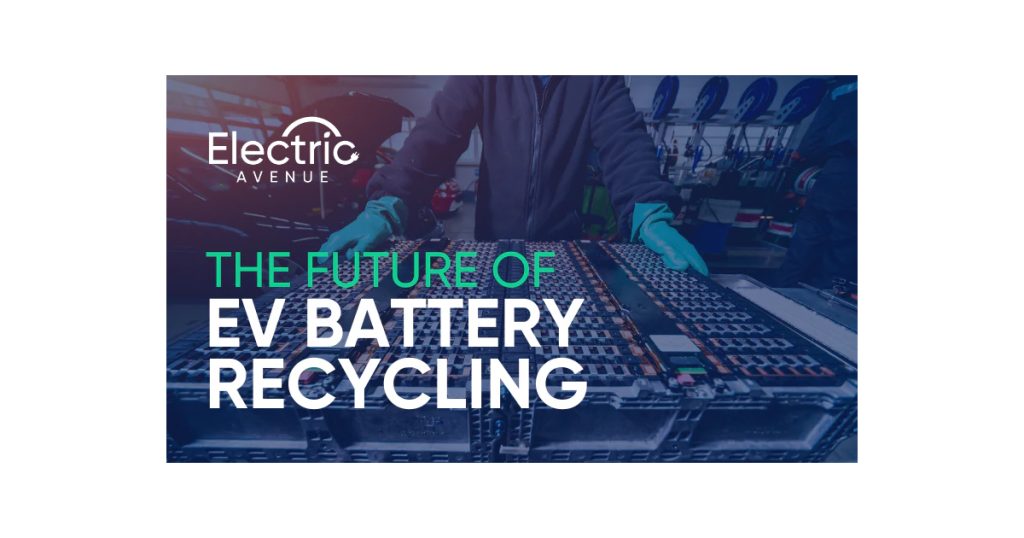
The Future of EV Battery Recycling: Facts, Challenges & Innovations
April 3, 2025
One of the biggest arguments against electric vehicles (EVs) is their batteries—specifically, concerns around mining, waste, and recycling. Critics point out that while EVs reduce tailpipe emissions, their batteries require rare materials and can be difficult to recycle. So, does that mean EVs aren’t as green as they seem? Not quite.
Yes, battery production and disposal present challenges, but here’s the good news: The EV industry is making major strides in sustainable mining, second-life battery applications, and advanced recycling technologies. In fact, with the right solutions in place, EV batteries can become a nearly closed-loop system—where materials are continually reused, minimizing waste and reducing the need for new mining.
The world is already seeing significant progress, from automakers investing in battery recovery programs to emerging technologies that recycle more of a battery’s critical materials and the companies behind them. This article will break down the lifecycle of EV batteries, explore what’s being done to improve recycling, and highlight the innovations that will make EVs even more sustainable in the future.
How Long Do EV Batteries Last?
Most EV batteries are designed to last between 10 to 20 years before their capacity diminishes to the point where they are no longer viable for automotive use. Automakers typically provide warranties covering 8 years or 100,000 miles, but real-world data suggests that many batteries last well beyond that. Even when they are no longer efficient for EVs, they often get a second life in energy storage systems before being fully recycled. This extends their usability and reduces waste, reinforcing EVs as a long-term sustainable solution.

Are EV Batteries Worse for the Environment Than ICE Vehicles?
A common argument against EVs is the environmental impact of their batteries. While battery production requires mining materials like lithium, cobalt, and nickel—processes that can impact ecosystems and water supplies—EVs still have a significantly lower lifetime carbon footprint compared to internal combustion engine (ICE) vehicles.
For instance, lithium extraction in regions like Chile’s Salar de Atacama consumes large amounts of water, affecting local agriculture. However, the industry is actively working on more sustainable mining techniques and improving recycling rates. While lead-acid batteries used in ICE vehicles boast a 99% recycling rate, lithium-ion battery recycling is still catching up—currently estimated at 50-60% in regions with advanced infrastructure. But this number is rapidly improving as new recycling methods emerge. If not properly managed, end-of-life EV batteries could generate up to 12 million tons of waste annually by 2030. That’s why investment in battery recycling and second-life applications is critical—and major progress is already happening.
What Parts of an EV Battery Can Be Recycled?
EV batteries are primarily made of lithium-ion cells, containing valuable materials like lithium, nickel, cobalt, and graphite. Fortunately, much of an EV battery can be recovered and reused:
Recyclable Components:
- Nickel, cobalt, and copper –These metals can be extracted and reused in new batteries or other industrial applications.
- Lithium – Recovering lithium is more challenging but possible through hydrometallurgical and direct recycling processes.
- Aluminum and steel casings – These materials are easily recyclable and commonly repurposed.
- Plastic Components – Some of the polymer-based materials in battery packs can also be recycled.

Difficult to Recycle Components:
- Electrolytes –The chemical membranes inside batteries degrade over time and can be difficult to reclaim
- Lithium – Thin polymer membranes inside battery cells are challenging to recycle and often need specialized processing
Current Recycling Methods
Battery recycling technology is evolving quickly, with several approaches being refined to improve efficiency and sustainability:
- Pyrometallurgy (Smelting) –A high-temperature process that extracts valuable metals but can lead to material loss and high energy consumption.
- Hydrometallurgy (Chemical Leaching) – A chemical-based process that dissolves metals for recovery, offering higher efficiency and less waste than smelting.
- Direct Recycling – Cutting-edge method that preserves battery materials in their usable form, requiring less processing to make new batteries.
What’s Being Done to Improve EV Battery Recycling?
Governments, automakers, and tech companies are actively working to make EV battery recycling more effective:
Automaker-Led Initiatives:
- Tesla, GM, and Ford are partnering with recyclers to reclaim battery materials.
- Volkswagen has launched a pilot battery recycling plant with a goal of recovering 95% of raw materials.

Legislation and Regulations:
- The European Union has proposed stricter recycling mandates, requiring new batteries to contain a minimum percentage of recycled materials.
- China has introduced a battery recycling tracking system to ensure proper disposal and reuse.
- In the United States, the Department of Energy is funding research into efficient battery recycling technologies and expanding domestic recycling capacity.
- Canada is implementing a national EV battery recycling framework with an emphasis on Extended Producer Responsibility (EPR), which will require automakers to take responsibility for end-of-life battery recycling.
- Provinces like Quebec, Ontario, and British Columbia are leading the way, with Lithion and Li-Cycle developing advanced battery recycling technologies capable of recovering over 95% of battery materials.
New Innovations:
- Companies like Redwood Materials and Li-Cycle are pioneering advanced recycling techniques to maximize material recovery.
- Second-life applications for used EV batteries are growing, including their use in grid storage and renewable energy systems.
The Future of EV Battery Recycling: A Path to Sustainability
The future of EV battery recycling is looking brighter every year. Several promising innovations are set to redefine how to handle end-of-life batteries:
Advanced Direct Recycling – Expected to scale within 5-10 years, this method will significantly improve material recovery and reduce energy consumption.
Solid-State Batteries: Likely to enter the market in the next 10-15 years, these batteries eliminate liquid electrolytes, making them safer, longer-lasting, and easier to recycle.
AI-Optimized Recycling Facilities: Machine learning and AI-driven sorting techniques will improve material separation, boosting efficiency and reducing costs.
Localized Battery Recycling Centers: By 2035, regional recycling hubs could reduce transportation emissions and create a more sustainable closed-loop battery economy.
How Will This Impact EV vs. ICE Environmental Footprints?
With improved recycling rates and sustainable battery technologies, EVs will continue to widen their environmental advantage over ICE vehicles. By 2040, projections suggest lifecycle emissions of EVs—including battery production and recycling—could be up to 80% lower than those of gasoline-powered cars, provided renewable energy and efficient recycling systems are in place.

Instead of continuously mining lithium, nickel, and cobalt, the industry is shifting toward a circular economy where recovered materials are reused, minimizing waste and environmental harm.
A Sustainable Future: The Potential Impact of Proper Recycling
While there’s still work to be done, the trajectory is clear—EV battery recycling is advancing rapidly, and the long-term sustainability of EVs is only improving. If recycling rates hit the 90-95% range that
automakers are targeting, the need for new mining will drastically decrease, emissions will drop, and battery production will become far more energy-efficient. In fact, recycling lithium uses 90% less energy than mining it, offering a major step forward in making EVs as green as possible.
When combined with clean energy sources, EVs could soon achieve up to 68% fewer lifecycle emissions than ICE vehicles, making them a cornerstone of a cleaner, more sustainable transportation future. The industry is on the right track—and the innovations happening now will make EVs even better for the planet in the years ahead.