
WAGO Makes Renewable Energy Easier to Connect to the Electrical Grid
August 17, 2026
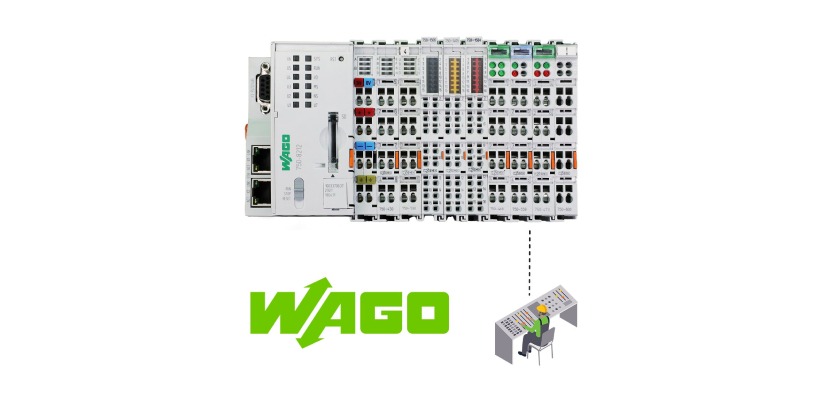
WAGO’s New Distributed Energy Resources controller adds IEEE 2030.5 (CSIP) support to its Energy Solutions Platform.
As utilities connect more renewable energy systems and distributed energy resources, ensuring a balance between energy generation and consumption, enabling equipment from different manufacturers to communicate reliably has become one of the grid’s biggest modernisation challenges.
To simplify the integration of distributed energy resources, WAGO introduces its new Distributed Energy Resources (DER) controller, the latest addition to its open Energy Solutions Platform. The WAGO DER controller adds IEEE 2030.5 (CSIP) support, a communication standard rapidly emerging as a preferred method for connecting distributed energy resources to the grid.
Using the WAGO DER controller with IEEE 2030.5 (CSIP Certified), engineering firms, system integrators, and original equipment manufacturers gain a standards-based communications interface that simplifies integration, significantly reduces development time, and helps utilities balance energy production and consumption as distributed energy resources continue to expand.
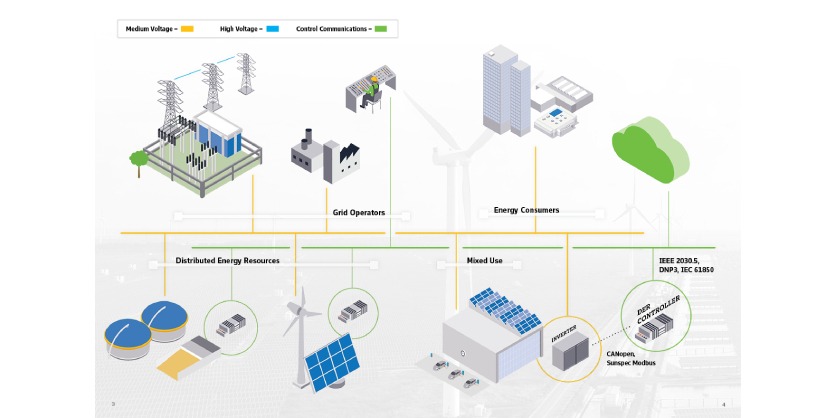
The DER controller operates at the Point of Common Coupling (PCC) between distributed energy resources and utility systems, providing a common communications interface and supporting IEEE 1547-2018 compliance for active and reactive power control functions as specified in Clauses 5 and 10. The WAGO DER controller does not require customers to redesign their existing automation architecture. In a typical application, from a southbound standpoint, the DER controller coordinates communication between solar generation, battery energy storage systems, and other distributed energy resources using SunSpec Modbus. From a northbound standpoint, it communicates with the utility through one standards-based interface such as DNP3 or IEEE 2030.5 (CSIP).
IEEE 2030.5 (CSIP), DNP3 and SunSpec Modbus are part of utility communications. The WAGO DER controller also supports the industry’s leading communications standards, including OPC UA, Ethernet/IP, EtherCAT, CAN, IEC 61850 (MMS and GOOSE) and IEC 60870-5-104, allowing customers to integrate distributed energy resources, substations, and utility systems through a single communications platform. WAGO delivers these capabilities as a pre-engineered CODESYS 3.5 function block that runs on the company’s Compact Controller 100, PFC200, and PFC200 XTR (extreme environments).
Instead of engineering, testing, and validating separate communications interfaces for each controller, customers deploy the same pre-engineered communications library across multiple WAGO control platforms. The communications library has been validated by a Nationally Recognized Testing Laboratory (NRTL). Validation gives designers and operations personnel confidence in standards compliance while reducing integration uncertainty. The result is a common engineering approach that can be deployed across projects instead of developing and validating new communications interfaces for each application.
Securing an Increasingly Connected Grid
Connecting more distributed energy resources solves one challenge. Securing those new connections has become the next. Every distributed energy resource connected to the electrical grid creates another potential pathway for cyberattack, making cybersecurity as important as interoperability in protecting critical infrastructure.
WAGO is developing controllers designed to meet IEC 62443-4-2, an internationally recognised cybersecurity standard for industrial automation components. Developing controllers to meet IEC 62443-4-2 also aligns with Europe’s Cyber Resilience Act, reflecting a broad global shift toward securing connected products and critical infrastructure throughout the automation system lifecycle. In addition, WAGO standard communication interfaces, such as DNP3, support TLS encryption and secure authentication for control commands (SAv5). Furthermore, IEEE 2030.5 was designed around Public Key Infrastructure (PKI) and TLS, enabling authentication of both endpoints and encryption of communications.
Open Automation for the Modern Electrical Grid
Grid modernisation rarely starts with a blank sheet of paper. Utilities, engineering firms, OEMs, and system integrators must integrate new distributed energy resources with existing substations, generators, protection systems, and other installed equipment.
Long before today’s grid modernisation initiatives, WAGO built its automation strategy around open architectures that adapt as technologies change and that align with the installed base. In 1995, WAGO introduced the world’s first fieldbus-independent modular I/O system, allowing engineers to change control networks without replacing the underlying inputs and outputs.
This commitment to open, vendor-independent automation now extends to utility energy systems through the WAGO Energy Solutions Platform. This platform helps modernise the electrical grid while protecting existing automation investments, reducing redesign, avoiding vendor lock-in, and preserving long-term flexibility as grid requirements change.
WAGO Energy Solutions Platform delivers open-system capabilities through its fieldbus-independent 750 Series Remote I/O for connecting field devices, CODESYS-based controllers and edge controllers for automation and control, industrial communications for interoperable networking, engineering and application software for system development, and power management technologies that complete the energy automation architecture.
One Platform for Modern Energy Infrastructure
The new DER controller is one example of how WAGO applies its open automation platform across the broader energy sector. The platform supports a wide range of energy applications while enabling customers to standardise on one engineering environment.
Renewable energy projects, including solar generation, battery energy storage systems, and microgrids, share the challenge of coordinating multiple energy assets while maintaining reliable grid integration.
WAGO offers programmable controllers, remote I/O, industrial communications, and engineering and application software for monitoring, controlling, and optimising these systems.
Customers work with one interoperable automation platform that simplifies engineering while preserving the ability to communicate with and control the installed base of equipment.
WAGO’s platform extends across distribution and customer substations and other electrical infrastructure, where utilities and engineering firms must modernise existing systems without replacing proven equipment. WAGO combines remote terminal units (RTUs), programmable controllers, flexible remote I/O, and standards-based communications to enable grid automation and system integration while preserving long-term flexibility as utility requirements change.
About WAGO:
Innovation is at the heart of everything they do at WAGO. From their pioneering CAGE CLAMP® spring pressure connection technology to their extensive range of Interconnect, Interface and Automation solutions, such as the fieldbus independent WAGO-I/O-SYSTEM, their customers count on the unconditional performance and reliability of their products to ensure the safe, efficient operation of their systems every time.
More Information
For additional information, visit www.wago.com/ca-en/energy . Contact WAGO at 1-888-WAGO-221 (9246-221) or customerservice.ca@wago.com.
Related Story
Björn Twiehaus Appointed New CEO of the WAGO Group
Since pioneering spring pressure connection technology, WAGO has grown into one of the world’s leading providers of electrical interconnection and automation technology. With the appointment of Björn Twiehaus, WAGO will continue this success story and further drive international growth, innovation, and business development.